#43AMERICANS
The laws written to protect us are being used against us.
Not broken. Not ignored. Used — each one turned around and pointed the other way.
The Travel Act
Passed in 1961 to chase mobsters across state lines. Today an email supplies the federal hook, and a private company’s internal employment rules become a federal felony.
The sentencing guidelines
Written so that punishment would be consistent. Their loss tables now turn a paperwork case into decades, on money that no one ever received.
Harmless error
Written so that a whole trial would not collapse over a technicality. It is now the mechanism by which a court finds the government wrong and leaves the conviction standing.
The plea bargain
Written so that a defendant could resolve a case without a trial. 97 of every 100 federal defendants now plead guilty, because the exposure for refusing is set by the same office making the offer.
Prosecutorial immunity
Written so that prosecutors could make hard calls without being sued over every one. It is absolute, so whether the call was made in good faith is a question no court ever reaches.
Every one of those rules was written for a reason, and every one of them sits neutral until somebody picks it up and decides which way to aim it. A person decided which way to point every single one of them.
The protections are still on the books. They are what is being used as the weapon.
This is not a handful of bad cases. It is a practice, it is documented here forty-three times, and it can reach anyone the Justice Department decides to charge. Weaponized justice takes seven forms — only one of them is political →
Who we are
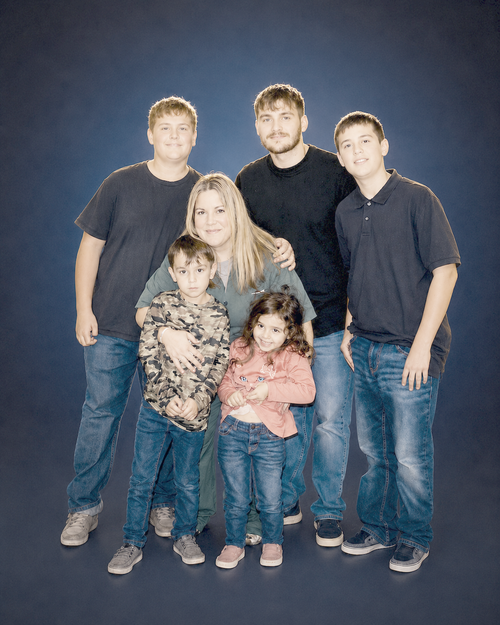
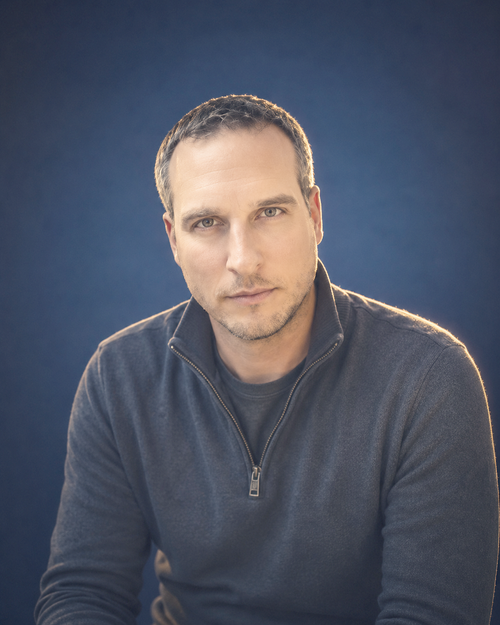
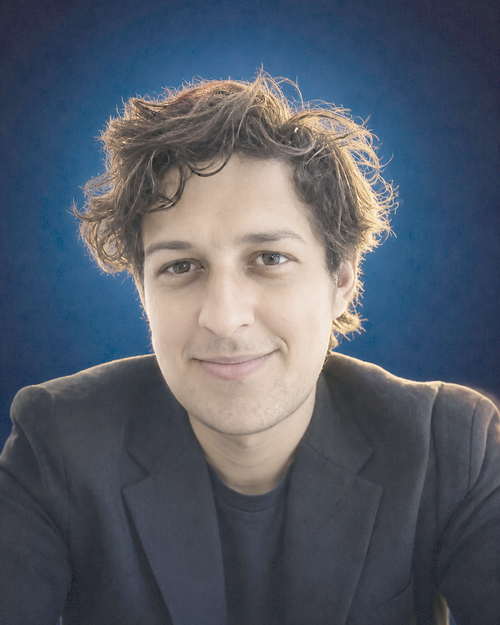
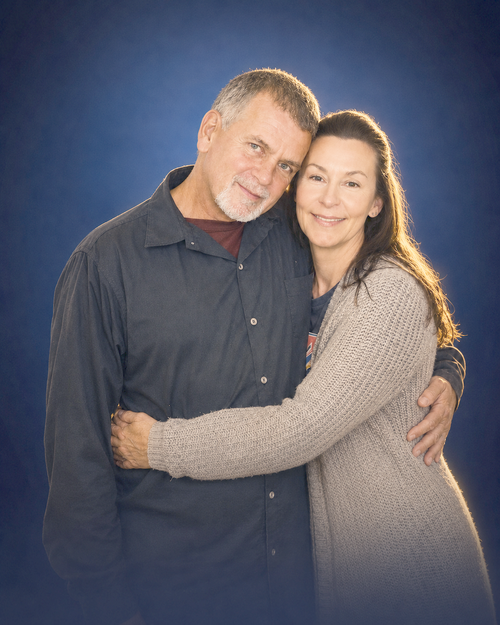
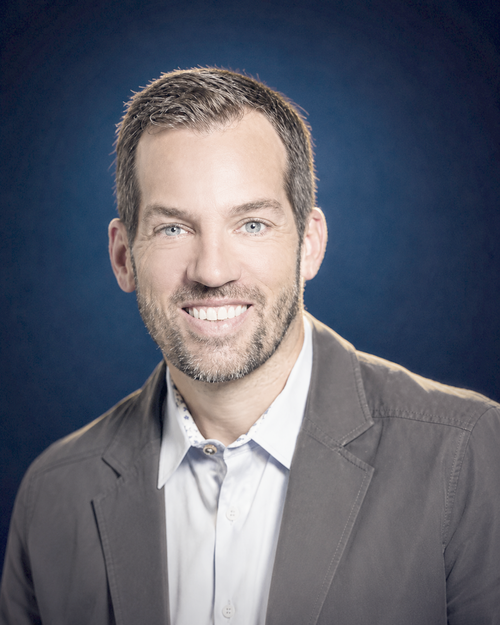
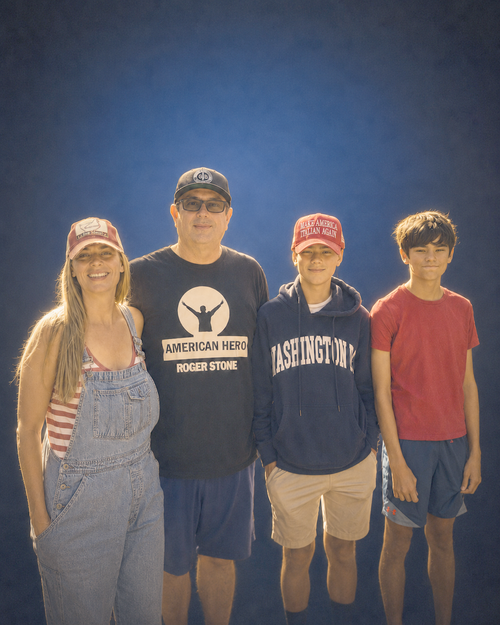
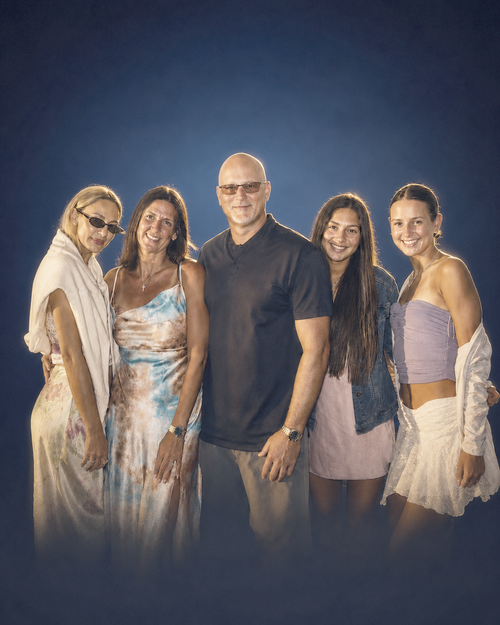
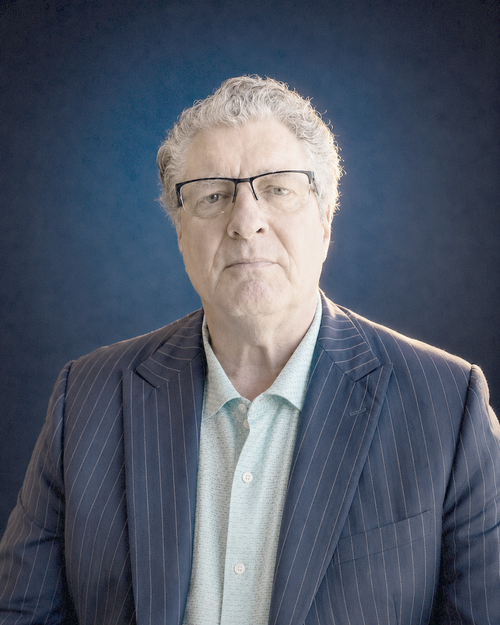
Nurses, doctors, veterans, engineers, software developers, small business owners, public servants, parents. One of us was never charged with anything and lost nearly $900,000 to forfeiture. One was acquitted before the jury finished deliberating, having already spent everything he owned on his defense. Twelve are in prison tonight. The verdicts differ. The cost did not.
They have the press release, the podium and the paperwork. Every one of us has the same thing instead: a record nobody read. So this is where the records go — the same documents, in public, under our own names, where anyone can check them line by line against the government’s version.
Read these cases on the documents, not on whether you like the person they happened to. Every claim is sourced and linked, and any one of them can be checked in an afternoon.
One person saying this happened is dismissible. That is not an accident, it is the design. Forty-three is harder to wave off. Four hundred is a finding.
No lobbyists. No connections. Just the record. This site is built and paid for by the people asking — no outside funding, no consultants, and nobody retained to advocate for us. More about who we are →
Dates that have not happened yet.
Everything else on this site already happened. These have not.
Michael Castillero and Brian Martinsen were due to report on September 10, then on October 20. Both dates were moved to October 29.
Read their casesPart one
When the government is wrong, it costs the government nothing.
This is not a claim about anyone’s motive. It is a claim about consequence, and it is written into the rules.
A federal jury was told that Elizabeth Hernandez had to prove she acted in good faith. That is backwards — the government has to prove she did not. On 31 July 2026 the Eleventh Circuit agreed the instruction was wrong, and called the error harmless. The same court found the trial judge gave the government forty minutes to deliver its closing argument and gave her thirty, and called that harmless too.1
She is serving twenty years.
Now run it the other way. When a defendant is the one who misleads a court, the sentencing guidelines add levels for obstruction of justice and the sentence goes up by years. There is no provision running in the opposite direction. No enhancement. No remedy. No name in any report.
Their errors are harmless. Ours are not.
What the Department records about itself
In fiscal year 2022 the Department’s own Office of Professional Responsibility processed 397 matters and found professional misconduct in fourteen of them.2 Fourteen findings against Department attorneys, in writing, by the Department. No attorney was named in any of those reports.
Separately, and in a different decade, the Government Accountability Office examined how the Department disciplines its attorneys. It found the Department could not confirm that attorneys found to have committed misconduct actually served the discipline imposed on them.3 Not that the discipline was light. That there is no record it occurred.
Those are two separate findings, years apart. GAO did not review the 2022 matters, and we do not claim it did.
A federal judge asked the question out loud
On 18 November 2025 a federal district judge asked the government why one case had sat for six years while comparable cases were charged and tried. Was this one weaker than those? Counsel said yes, and that it went without saying — it would have been charged otherwise. The judge cut in: “No, I think it has to be said. That’s the whole point.” The government had separately argued in writing that it may pick a defendant based partly on the deterrent effect on other people. That argument is lawful. No court ever reached it.4
And there is almost nothing to recover
The one statute Congress wrote to repay a wrongly prosecuted defendant, the Hyde Amendment, requires showing the government’s position was vexatious, frivolous, or brought in bad faith — a state of mind. Compensation for an unjust conviction requires a court-issued certificate of innocence. A prosecutor carries absolute immunity, so the question of good faith is never reached at all.5
Every review available to us happens inside the institution being reviewed, by people who report to it, under standards the Department itself could not confirm were enforced.
We know what that is like from the other end. Every one of us has been told to trust a process that answers to nobody, and has watched it answer to nobody.
A system cannot be the judge of its own conduct. That is why we are asking someone outside it to look.
Part two
The government has already said some of these went wrong. The record still says otherwise.
Not us. It.
- 7 April 2025 · a policy the prosecution outran The Deputy Attorney General issued a memorandum titled “Ending Regulation by Prosecution,” directing federal prosecutors not to charge unlicensed money transmitting in digital-asset cases. Four months later Roman Storm, one of the forty-three, was convicted of exactly that. He faces retrial.6
- January 2025 · dismissed with prejudice Dr. Eithan Haim, one of the forty-three, was a surgical resident at Baylor College of Medicine and the source for reporting that Texas Children’s Hospital had continued its pediatric gender medicine program after announcing it had stopped. He was indicted on four felony counts of criminal HIPAA violation and faced up to ten years. The indictment was sealed, so he and his lawyers did not know what the charges rested on. In January 2025 Judge David Hittner of the Southern District of Texas dismissed every count with prejudice, meaning the government can never bring them again. He testified before a House Judiciary subcommittee that April.7
- 12 July 2025 · dismissed on the fifth day of trial Dr. Michael Kirk Moore, one of the forty-three, is a Utah plastic surgeon who was indicted in January 2023 and faced up to 35 years. The government alleged he distributed at least 1,937 fraudulent COVID-19 vaccination cards, destroyed more than $28,000 in government-supplied vaccine, and gave saline shots to minors at their parents’ request — we state that plainly because a reader should have it from us. His trial was under way in Salt Lake City when the Attorney General ordered the case dismissed, and the Acting U.S. Attorney filed the motion citing the interests of justice. Moore estimates he lost about two-thirds of his practice, because the money that would have marketed it paid his lawyers.8
- Two full pardons Jeremy Hutchinson, May 2025. Mike McMahon — a retired NYPD sergeant who was at the towers on 11 September — November 2025. The Second Circuit vacated McMahon’s conviction the following year.9
Five of the forty-three. A judge ended one permanently. An Attorney General ended another in the middle of a trial. A President ended two more with a signature. Every one of them an official act, on the record, by the government itself.
Not one of them got their years back, their savings back, or their name back.
Still online
The Justice Manual instructs that a press release issued before a finding of guilt should say the charge is only an accusation and that the defendant is presumed innocent.10 It says nothing about what happens afterward. There is no correction policy. There is nobody to ask.
So the announcement outlives the case. The Department’s page for Angelica Pacheco still lists charges that were dismissed before trial, still offers the thrown-out indictment for download, and still asks for victim impact statements. It was last updated two and a half months after the case ended.11
The accusation is permanent. The correction was never written.
Part three
People with money started putting a price on clemency.
Thirty million dollars for one, reportedly. We filed ours the ordinary way, for free — and it was not the White House selling.
Over the past year a market grew up around presidential clemency. Bloomberg reported an offer to arrange a pardon for $30 million, which the White House said it knew nothing about. NBC News reported lobbyists fielding proposals as high as $5 million to press a single case. Reporting describes the White House Chief of Staff and the White House Counsel restructuring the process to shut that traffic out.12
A White House official told reporters nobody should be profiting off pardons, and that anyone spending money to lobby for one is wasting it.12
We agree, and we have never paid anyone a dollar for access.
What is on this site instead is the record. Every case documented from indictments, plea agreements, sentencing transcripts, appellate opinions, and the Justice Department’s own press releases. Anyone can check every line of it.
What gets written about
- Who received a pardon
- Who they know
- Whether the grant looks improper
What does not
- A jury told that a defendant must prove her own good faith, and an appeals court calling that harmless.
- Nearly $900,000 taken from a family through civil forfeiture with no criminal charge ever filed.
- A man acquitted before the jury finished deliberating, in a state he had never set foot in, who had already spent everything he owned.
Clemency was ordinary for most of the last century and then it closed — from better than a fifth of requests granted to two percent, under presidents of both parties.13 It has never been a finding of innocence. It is the constitutional power to fix a sentence that does not match what a person did, or a process that went wrong in a way the courts will not correct.
- United States v. Elizabeth Hernandez, U.S. Court of Appeals for the Eleventh Circuit, 31 July 2026. Full opinion (PDF) · Documents and full context at Case 9.
- U.S. Department of Justice, Office of Professional Responsibility, Annual Report, fiscal year 2022. justice.gov/opr
- U.S. Government Accountability Office, GAO-15-156, Professional Misconduct: DOJ Could Strengthen Procedures for Disciplining Its Attorneys (2015). Report (PDF)
- Transcript of hearing, 18 November 2025, United States v. Angelica Pacheco, S.D. Fla. Documents and full context at Case 43.
- Hyde Amendment, Pub. L. No. 105-119, § 617, reprinted at 18 U.S.C. § 3006A note · 28 U.S.C. §§ 1495, 2513 · Imbler v. Pachtman, 424 U.S. 409 (1976).
- U.S. Department of Justice, Office of the Deputy Attorney General, “Ending Regulation by Prosecution,” 7 April 2025. justice.gov/dag
- United States v. Haim, S.D. Tex. Order of dismissal with prejudice signed by Judge David Hittner, January 2025. Testimony of Dr. Eithan Haim, U.S. House Committee on the Judiciary, Subcommittee hearing, 9 April 2025. Written statement (PDF)
- United States v. Moore, D. Utah. Indictment returned 11 January 2023; motion to dismiss filed by Acting U.S. Attorney Felice John Viti, 12 July 2025. NBC News · ProPublica
- U.S. Department of Justice, Office of the Pardon Attorney, Clemency Grants by President Donald J. Trump (2025–Present). justice.gov/pardon
- U.S. Department of Justice, Justice Manual 1-7.000, Confidentiality and Media Contacts Policy. justice.gov/jm
- U.S. Department of Justice, Criminal Division case page, United States v. Angelica Pacheco. Captured 8 August 2026. See Case 43.
- NBC News, “White House tightens Trump pardon process amid concerns about outsiders trying to profit.” nbcnews.com · NOTUS, “It’s Chaos: How Trump’s Pardoning Process Keeps Changing.” notus.org
- Office of the Pardon Attorney, U.S. Department of Justice, clemency statistics compiled by Pew Research Center, 7 February 2025. Pew Research Center analysis · Full chart at Clemency by the numbers.